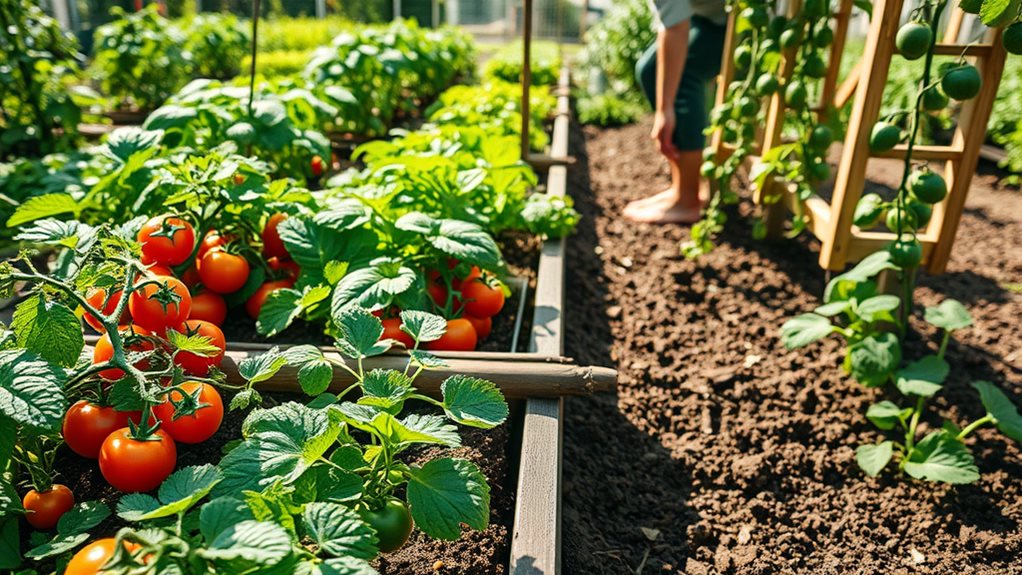
Genius vegetable gardening hacks involve strategic practices that greatly enhance growth and productivity. Companion planting, such as pairing tomatoes with basil, creates a harmonious ecosystem while natural pest control methods utilize essential oils to repel harmful insects. DIY composting transforms kitchen scraps into nutrient-rich soil amendments. Vertical gardening techniques optimize limited space for diverse crops, while essential tools like soil testing kits are crucial for success. Exploring these methods leads to greater gardening efficiency and satisfaction.
Companion Planting for Enhanced Growth
Companion planting, which involves strategically placing different plant species in proximity to one another, can greatly enhance growth and yield. This practice capitalizes on beneficial plant pairings that create a growth synergy, promoting healthier crops. For instance, planting tomatoes alongside basil can improve flavor and deter pests, while onions paired with carrots can prevent fungal diseases. The proximity of certain plants can also enhance nutrient absorption, as deep-rooted plants draw minerals from the soil that shallower roots can access. Additionally, companion planting can maximize space and reduce weed competition, allowing gardeners to cultivate a diverse range of vegetables efficiently. Understanding these interactions enables gardeners to make informed choices, fostering a more productive and sustainable gardening environment.
DIY Composting: Turn Kitchen Scraps Into Gold
Composting offers numerous benefits, including improved soil health and reduced waste. Various composting methods can effectively transform kitchen scraps into nutrient-rich organic matter. Identifying suitable kitchen scraps for composting is essential for maximizing the process and enhancing garden productivity.
Benefits of Composting
While many gardeners seek sustainable practices to enhance their soil health, the process of turning kitchen scraps into nutrient-rich compost offers an effective solution. Composting not only reduces waste but also enriches garden soil, providing essential nutrients that foster plant growth.
Key compost benefits include:
- Improved soil structure and aeration
- Enhanced moisture retention and drainage
- Suppression of plant diseases and pests
Despite its advantages, compost myths often deter potential composters. For instance, some believe that composting requires extensive space or specialized knowledge, which is simply untrue. By debunking these misconceptions, more gardeners can embrace composting, transforming their kitchen waste into a valuable resource that supports their gardening endeavors and promotes ecological balance.
Composting Methods Explained
Understanding the various methods of composting allows gardeners to effectively transform kitchen scraps into nutrient-dense soil amendments. Two primary techniques include hot composting and cold composting. Hot composting involves actively managing the compost pile to maintain high temperatures, typically between 130°F and 160°F. This method accelerates decomposition, allowing for the compost to be ready in a matter of weeks. In contrast, cold composting is a more passive approach, where materials are simply layered and left to decompose over time, often taking several months to a year. While cold composting requires less effort, it produces a less uniform product. Both methods offer unique benefits, enabling gardeners to choose the approach that best aligns with their lifestyle and gardening goals.
Kitchen Scraps to Use
Turning kitchen scraps into compost not only reduces waste but also enriches garden soil. By utilizing various kitchen scrap varieties, gardeners can harness nutrients that promote healthy plant growth. This practice aligns with sustainable gardening principles and fosters a sense of freedom in resource management.
Key kitchen scraps to take into account include:
- Vegetable peelings: Rich in nitrogen, they accelerate compost breakdown.
- Eggshells: Provide calcium, essential for plant cell structure.
- Coffee grounds: Offer acidity and nitrogen, enhancing soil fertility.
Incorporating these scraps can also lead to vegetable regrowth tips, allowing gardeners to cultivate new plants from leftover food. Consequently, composting kitchen scraps is not only practical but also transforms waste into valuable garden resources.
Natural Pest Control Methods
Natural pest control methods offer sustainable alternatives to chemical pesticides, promoting healthier vegetable gardening practices. Essential oils, known for their insect-repelling properties, can be utilized effectively to deter pests, while companion planting techniques foster beneficial plant interactions that can naturally suppress pest populations. Implementing these strategies not only enhances crop resilience but also contributes to a balanced ecosystem within the garden.
Essential Oils for Repellent
Numerous gardeners have turned to essential oils as an effective strategy for pest control in vegetable gardens. These natural insect deterrents, derived from aromatic plants, offer a chemical-free alternative to conventional pesticides. The following essential oils are particularly noted for their repellent properties:
- Peppermint Oil: Known for deterring ants and spiders.
- Lavender Oil: Effective against mosquitoes and moths.
- Citrus Oil: Acts as a deterrent for a variety of insects, including flies and beetles.
When used in combination with a carrier oil or water, these essential oils can be sprayed directly onto plants, creating a protective barrier. This approach not only safeguards crops but also aligns with a more sustainable gardening philosophy, promoting freedom from synthetic chemicals.
Companion Planting Techniques
Companion planting techniques serve as an innovative approach to pest control by utilizing the natural relationships between different plant species. This method capitalizes on companion planting benefits, such as enhanced growth, improved flavor, and effective pest deterrence. By strategically pairing plants, gardeners can create a balanced ecosystem that naturally repels harmful insects. For instance, the combination of marigolds with tomatoes is a well-known companion planting pairing, as marigolds emit compounds that deter nematodes and other pests. Similarly, basil planted alongside peppers can enhance flavor while repelling aphids. Overall, companion planting fosters biodiversity and reduces reliance on chemical pesticides, empowering gardeners to cultivate thriving vegetable gardens with minimal intervention. Hence, this technique embodies a sustainable and freedom-oriented gardening philosophy.
Cost-Saving Strategies for Budget-Friendly Gardening
While many may assume that gardening requires a hefty investment, there are several cost-saving strategies that can make vegetable gardening accessible to anyone on a budget. By adopting these practices, aspiring gardeners can cultivate their green space without financial strain:
- Utilize budget-friendly seeds to maximize yield at minimal cost.
- Repurpose recycled containers for planting, reducing waste and expenses.
- Implement companion planting to enhance productivity and deter pests naturally.
These strategies not only lessen the financial burden but also promote sustainability. By leveraging inexpensive resources and creative solutions, individuals can enjoy the freedom of gardening while nurturing their environment. This approach fosters a fulfilling experience, transforming gardening from a luxury into an attainable and rewarding endeavor for all.
Essential Tools for Every Gardener
Successful vegetable gardening not only relies on cost-effective strategies but also the right tools that enhance efficiency and productivity. Essential tools include a soil testing kit to assess nutrient levels and pH, ensuring ideal conditions for plant growth. A sturdy garden fork and trowel facilitate soil aeration and planting, while quality pruners promote effective garden maintenance by allowing precise trimming. A watering can or hose with adjustable settings supports proper irrigation, vital for healthy crops. Additionally, a thorough gardening journal can track progress, helping identify successful practices. Equipped with these tools, gardeners can cultivate their vegetable patches with confidence, fostering an environment where plants thrive and freedom of choice in gardening techniques is fully embraced.
Maximizing Space With Vertical Gardening Techniques
When space is limited, vertical gardening techniques offer an innovative solution for maximizing vegetable production in small areas. By employing vertical planters and space-saving structures, gardeners can cultivate a diverse range of vegetables without sacrificing precious ground space.
Key benefits of vertical gardening include:
- Enhanced air circulation: Reduces disease risk and promotes healthier plants.
- Easier maintenance: Elevated plants are more accessible for watering and harvesting.
- Aesthetic appeal: Vertical gardens can transform small spaces into vibrant green areas.
Utilizing shelving units, wall-mounted pots, and trellises can optimize available vertical space, allowing for a productive and visually stunning garden. This approach not only fosters a sense of freedom in gardening but also encourages a sustainable way to grow food in urban environments.
Conclusion
To summarize, implementing these genius vegetable gardening hacks can greatly enhance both the efficiency and productivity of any garden. By utilizing companion planting, practicing DIY composting, and adopting natural pest control methods, gardeners can cultivate a thriving ecosystem. Furthermore, cost-saving strategies and essential tools further optimize the gardening experience, while vertical gardening techniques maximize limited space. Embracing these practical approaches not only fosters sustainable practices but also empowers gardeners to achieve their desired harvest with minimal resource expenditure.
About The Author